
Why small businesses are a target
It’s easy to assume hackers are only interested in banks and big corporations. In reality, most attacks are automated and opportunistic. Criminals send millions of phishing emails and scan the internet for unpatched systems, and they don’t care how big your company is. They care how easy you are to get into.
Small businesses tend to have fewer security controls, no one watching for suspicious activity and staff who wear several hats. That makes them attractive. The consequences can be severe: ransomware that locks every file, invoices redirected to a criminal’s bank account, client information leaked, and days or weeks of lost work.
The good news is that a handful of well-chosen protections stop the vast majority of attacks. You don’t need an enterprise security budget. You need the right basics, done properly and kept up to date.
Proactive protection, not cleanup after the fact
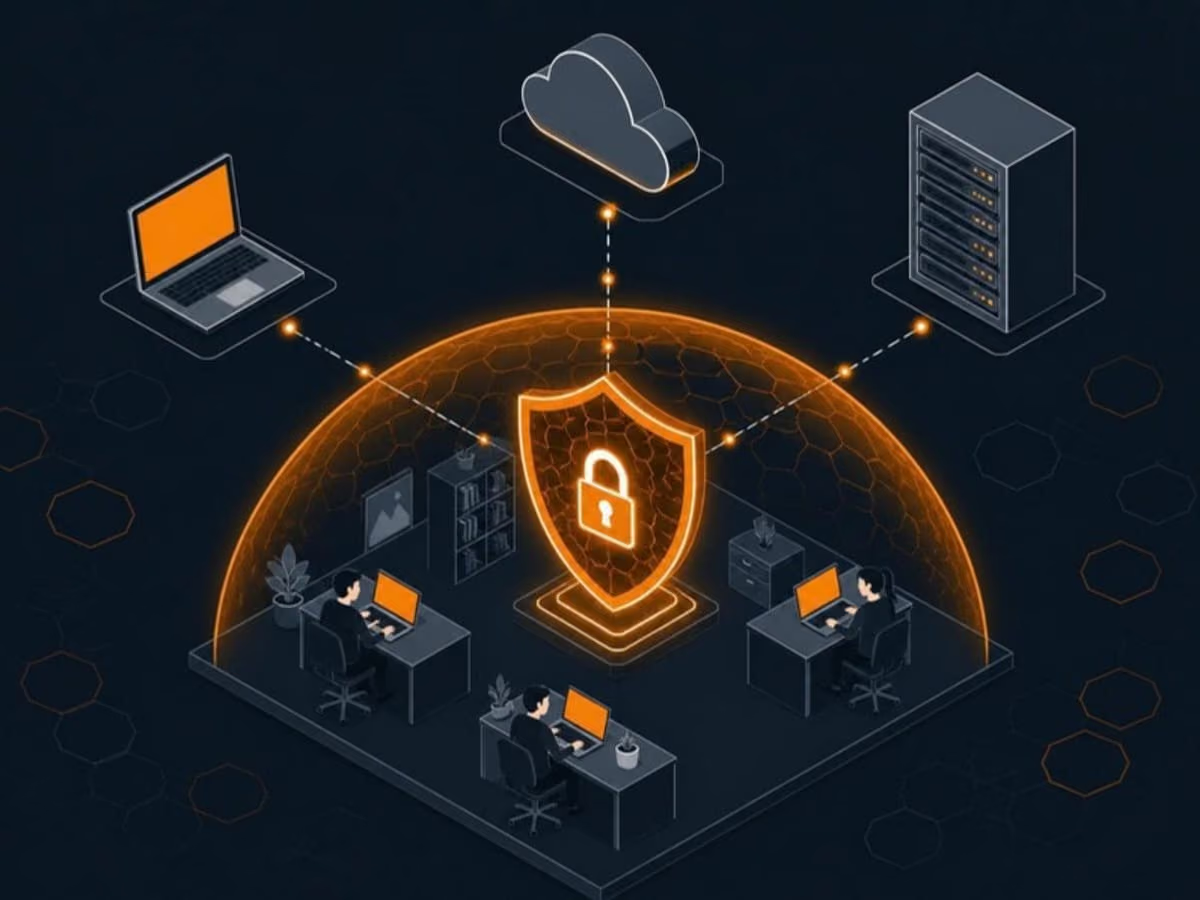
Our approach is to stop threats before they cause damage. That means layered defences, where each layer catches what another might miss:
- Identity: multi-factor authentication on email and cloud apps, strong password policies and prompt removal of access when staff leave.
- Email: filtering that blocks malicious links and attachments, plus SPF, DKIM and DMARC settings that make it harder for criminals to impersonate your domain.
- Devices: endpoint detection and response on every computer, disk encryption for laptops and automated patching.
- Network: a properly configured business firewall, separate Wi-Fi for guests and secure VPN access for remote staff.
- Data: backups that are isolated from your main systems, so ransomware can’t reach them.
- People: regular security awareness training and short courses, so your team becomes a line of defence rather than a weak spot.
Every business is different, so our certified team assesses your specific risks and builds a strategy that fits your budget and requirements rather than selling a one-size-fits-all package.
Around-the-clock monitoring
Security tools only help if someone pays attention to their alerts. We provide 24/7 monitoring of the security systems we manage, so suspicious sign-ins, malware detections and unusual network activity get investigated promptly. Security updates and maintenance are handled for you, which means protections don’t quietly fall out of date.
Staff training that people actually remember
Long annual training videos don’t change behaviour. Short, regular lessons do. Our security awareness training and learning courses use examples of the real scams hitting inboxes today: fake invoices, shared document notifications, delivery notices, messages that appear to come from your boss. Staff learn what to look for and what to do when something seems off, and over time they start reporting suspicious messages instead of opening them.
When something goes wrong
Even well-protected businesses can be hit. What matters then is speed and a clear plan. Our incident response process covers who to call, how to isolate affected systems, how to preserve evidence, how to restore from clean backups and how to communicate with clients and, where required, privacy regulators. Having that plan in place before an incident is the difference between a bad afternoon and a disastrous month.
Privacy compliance in Canada
If your business collects personal information, you have legal obligations to protect it. In British Columbia, most private businesses fall under the Personal Information Protection Act (PIPA), while PIPEDA applies to federally regulated organisations and to personal information that crosses provincial or national borders. Both require reasonable security safeguards. If you handle information about people in the EU, GDPR may also apply.
We translate those requirements into practical technical controls, like access restrictions, encryption, audit logs and retention settings, and help you document them so you can show what you’ve done if a client, insurer or regulator asks.
Security questionnaires from customers and partners
Larger customers and partners increasingly send security questionnaires before they’ll sign or renew a contract. Do you enforce MFA? Do you have EDR? Are backups offline or immutable? Do you train staff? We help you answer honestly and put any missing controls in place. Cyber insurers ask about the same protections, so having them in place also helps when you apply for coverage through your broker.